Blog › 28 March 2026
A Beautiful Kite Day at Minnis Bay — Turned Bad
Saturday 28 March 2026 — Minnis Bay, Kent — by Alan Jay
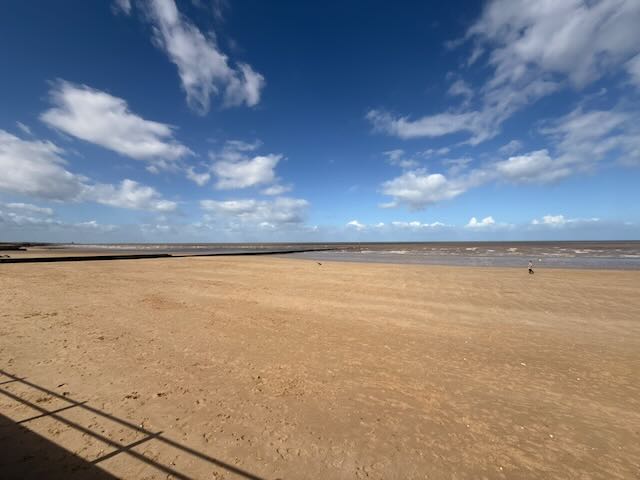
We had a great day kiting at the end of March at Minnis. The weather was still cold — single digits — but the sun was out. Wind was around 16–18 knots and I was on a 12m kite, the sun warming the wetsuits, sunlight glinting off the water, and life was beautiful.
Then, about an hour and a half in, with my fingers just starting to complain about the cold, I noticed a dark patch on the horizon — in the direction of the wind farm.
The warning signs
I made my way back to shore. As I came in I was waved at by one of the instructors — he'd seen it too. I packed up and warned a few people of the impending squall that might hit us.
About 10 minutes later it did.
The videos
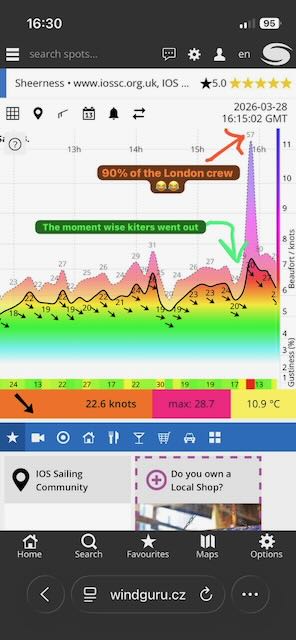
You can see from the footage that it was an interesting event for everyone. Gusts of over 50 knots were recorded at a local weather station.
Looking out across the bay as the squall line arrives.
Clip 2
Clip 3
Clip 4
Everyone OK
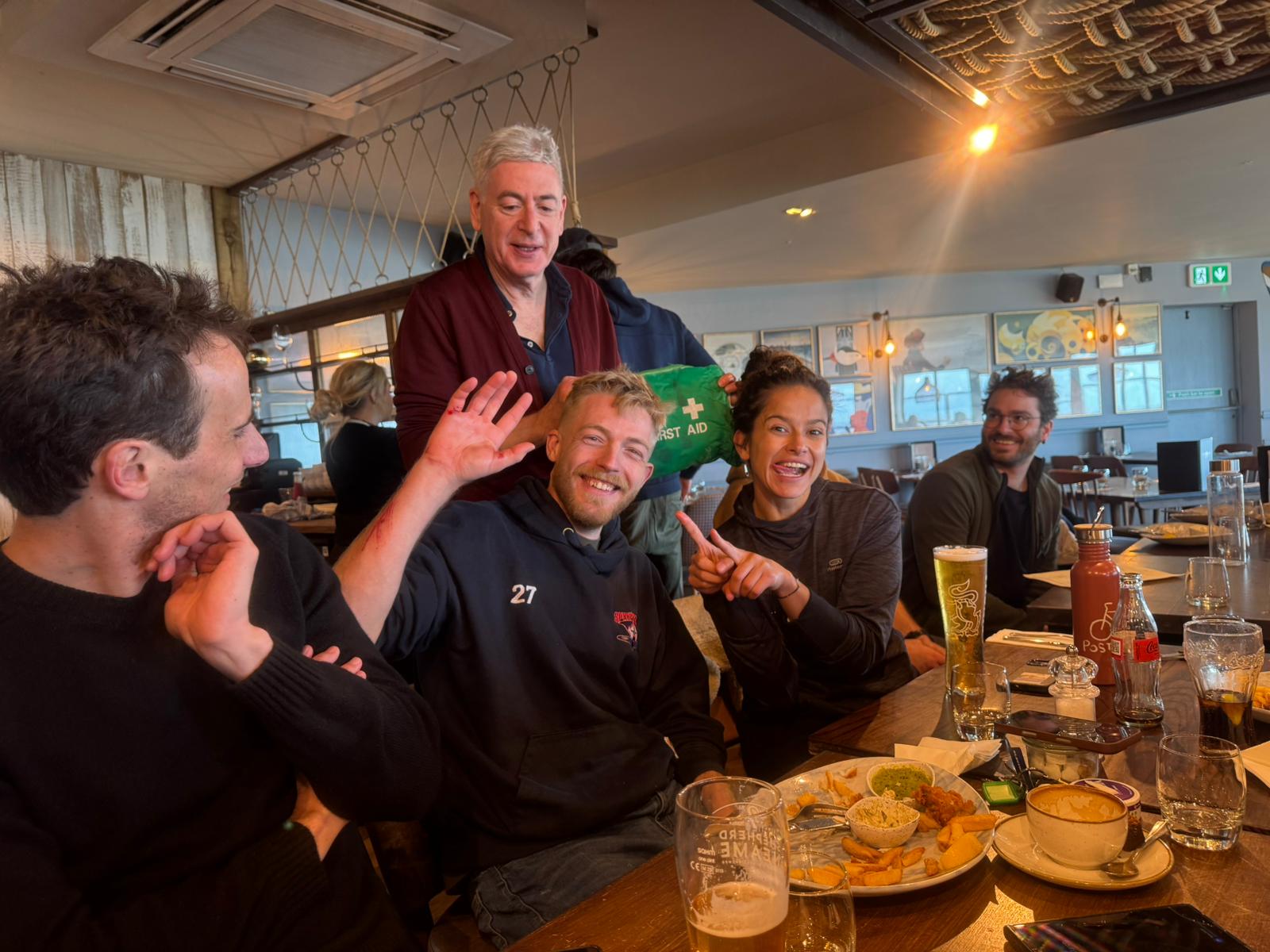
Fortunately everyone was OK — just a few cuts and bruises, tended to with the first aid kit. (See the pub photo further down — the green FIRST AID bag is out, a couple of grazes getting cleaned up, and everyone's smiling.) Minnis has a good amount of beach, and everyone who had a problem ejected their kites. That's the correct call, every time. Much safer a damaged kite than a damaged you.
Top tip — spotting a squall
If you see a dark band going all the way down to the sea upwind of you, it might be a squall. A squall is a band of fierce wind that might only last five minutes — but it can be very dangerous if you're not prepared.
If you're on the water when it hits: get your kite down low, at the edge of the wind window, pointing out to sea. These things last a few minutes — you might get a few mouthfuls of water, but you'll survive.
If you're on land: the kite can pull you uncontrollably, which is where it gets dangerous. Check your safety, check it actually works, check your second safety, and know how to get rid of the kite if you have to. On land these things can be horrific and have the potential to be life threatening. At Minnis everyone who had a problem ejected their kites — the right call every time.
Check your safety — now, not later
It's a reminder to check you know how your safety works, how the second release works, and that your safety is attached to the front of your harness. Check everything works, and that you know how to release if you have to.
Having a first aid kit in the car — or even in your bag at the beach — can be really useful. Hopefully you don't have to deal with these things, but better to know and be prepared.
There are some good YouTube videos that walk through exactly this. Worth a watch:
The pub afterwards
We were all fortunate, and ended the day with a warming drink in the pub, some food, and a debrief about what we'd just seen — before heading back to London. Days like this remind you why it's worth knowing your kit inside out: when the sun's out and the wind is 16–18 knots it's easy to forget that the weather can flip in ten minutes.
Stay safe out there.
— A
Session summary
Spot: Minnis Bay, Kent
Date: Saturday 28 March 2026
Starting wind: 16–18kn, sunny, single-digit air temp
Kite: 12m
Squall peak: gusts 50kn+ at local station (~10 min duration)
Outcome: everyone safe, a few cuts and bruises, kites ejected by those caught out
After session: pub — warming drinks and food before heading home